Building AI products
Magnetic
Co-founded an AI marketing agent for Shopify sellers. Led product and engineering from ideation to MVP with a team of 5.
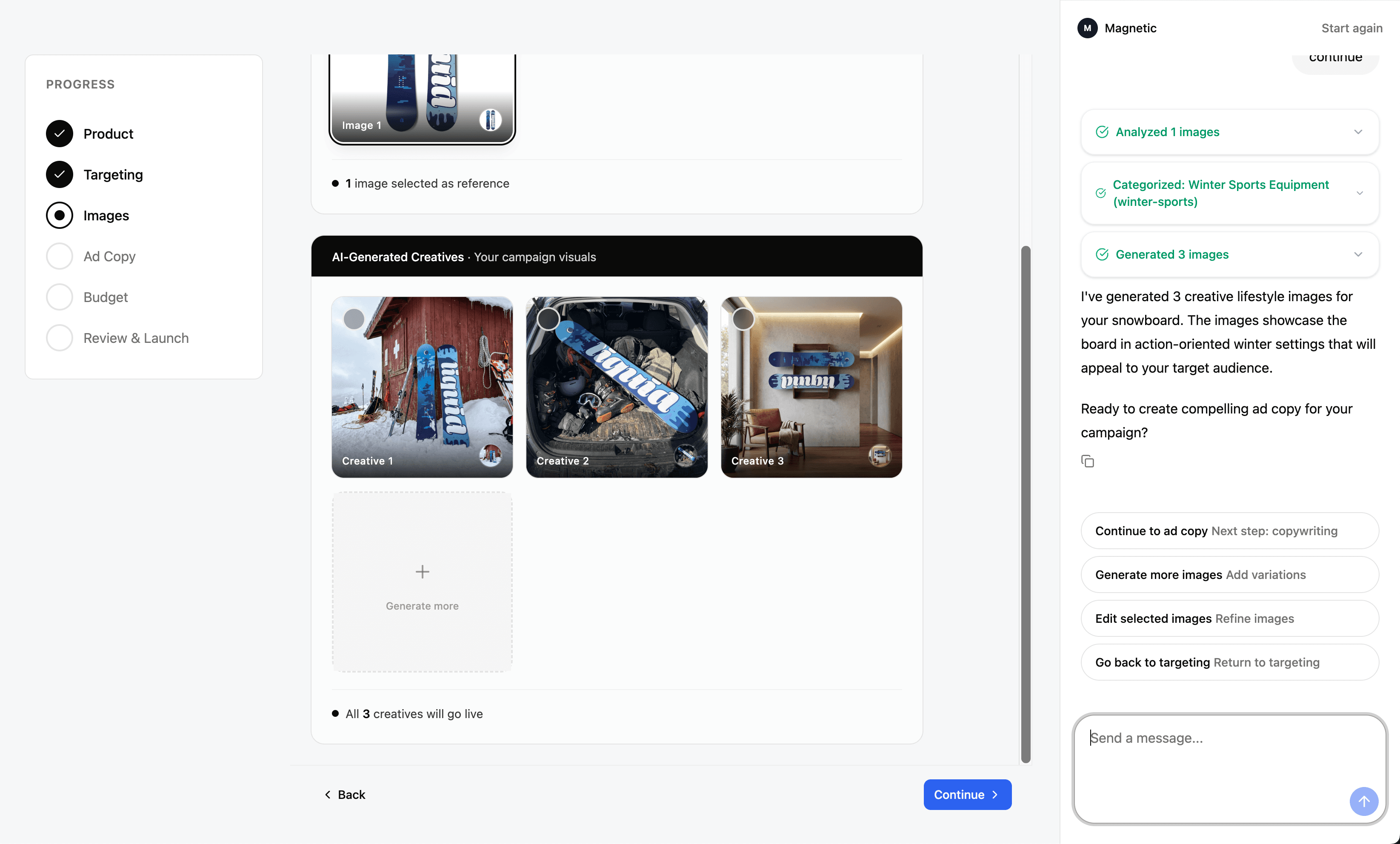
Agent vs UI balance
Started agent-first — AI drives everything. Users didn't want that for structured tasks. We landed on a per-screen balance: some screens need predictable UI with agent as backup, others work best as conversation.
Clear steps, predictable flow. Agent helps when things go wrong.
Merchant describes what they want, AI handles execution.
Studios
One agent trying to handle images, audiences, and campaigns at once = more hallucinations and wrong actions. We split the agent into “studios” — each is a scoped context with its own instructions, tools, and UI, but shared conversation history. The agent only sees what's relevant to the current task.
Each studio filters its tools and injects only relevant state — smaller context = fewer hallucinations
Technical decisions
Previously: Shipped AI Formulas in Structure — used AI to remove the technical barrier from our competitive moat and drive adoption. Different problem, simpler tech, same focus on business results.